Automate Your Customer Risk Ratings
Risk ratings form the foundation of AML/CTF compliance programs. Here are three approaches teams use — manual, fully automated, and hybrid — and how BNDRY supports all three.
Risk ratings form the foundation of AML/CTF compliance initiatives, but their management presents considerable challenges. Organisations use varying approaches — from spreadsheet-based systems to fully automated solutions, with many operating somewhere in between.
1. Fully Manual, Fully Managed
Compliance teams often assign risk ratings manually during customer onboarding and conduct periodic reviews. This approach proves valuable when decisions require subjective judgement about suspicious behaviour that may not trigger automated rules.
Risk data often lives in spreadsheets to keep sensitive data separate from broader business systems. But that brings its own set of problems: version control, limited access and no real audit trail.
BNDRY addresses this by enabling manual rating assignments with documented decision explanations and secure, auditable storage — no spreadsheets required.
2. Fully Automated, Integrated with Your Tools
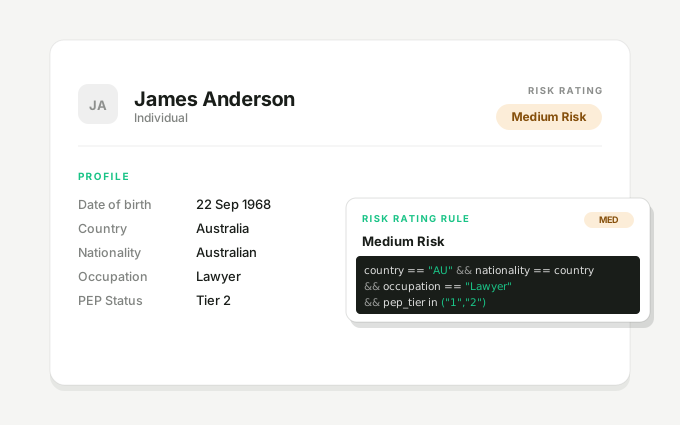
Organisations seeking streamlined processes can automate risk calculations using organisational rules configured directly in BNDRY. The system evaluates multiple risk factors — geography, industry, screening results, verification data, and customer behaviour — to generate consistent, real-time risk scores that align with organisational risk tolerance.
3. A Hybrid Approach, On Auto-Pilot with Human Override
Most organisations benefit from combining both methodologies. BNDRY enables automated risk ratings while preserving compliance team authority to manually override decisions when necessary.
Each rating — whether automated or manual — includes a timestamp and optional explanation, so you’ve always got a clear audit trail.
Conclusion
BNDRY supports manual, automated, and hybrid models, eliminating spreadsheet inefficiencies while maintaining structured, auditable, and secure risk management systems that fit the way your team actually works.
This article is intended as general information only and does not constitute legal advice.